Why Products Get Damaged in Transit and How to Prevent It?

Time:2026-09-16 Author:Isabella
0%

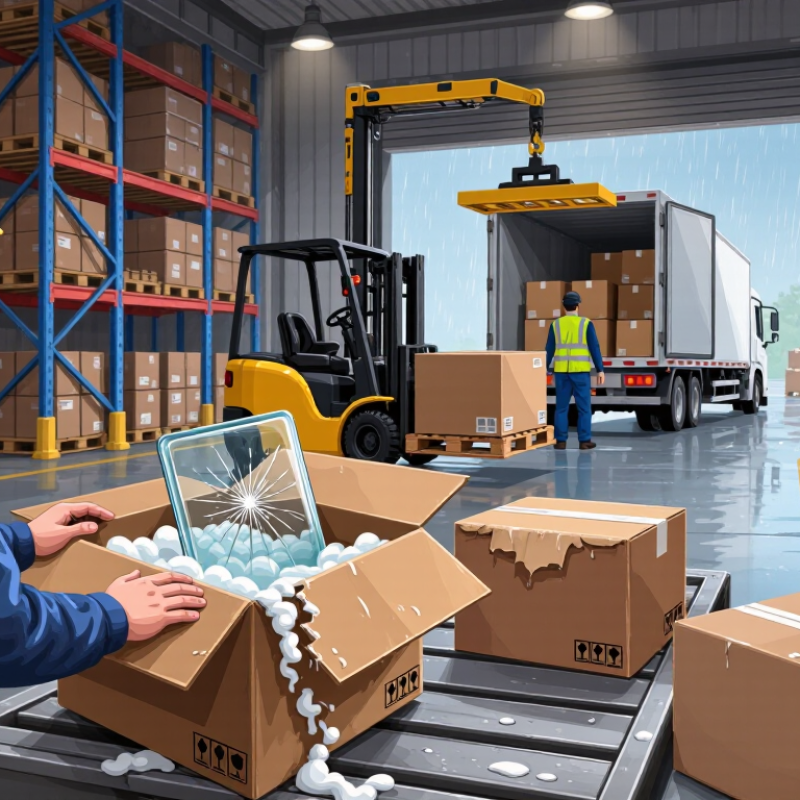
Products rarely arrive damaged for one dramatic reason. More often, small failures combine during loading, transport, storage, and final delivery. A carton may leave a warehouse intact, then face vibration, sudden braking, stacked weight, rain, or careless handling. Glass can crack. Corners can collapse. Moisture can weaken paperboard before anyone notices. These details matter because damage affects more than replacement costs. It can delay orders, reduce customer trust, and expose weaknesses in an otherwise reliable operation.

A practical investigation starts with evidence, not assumptions. Review photos, customer reports, packaging tests, carrier scans, and warehouse handling routines. Check whether the product moves inside its box. Look for crushed edges, loose fillers, broken seals, and pressure marks. The same symptom may have different causes. A dented carton might reflect poor stacking, insufficient cushioning, or an overloaded vehicle. Experience helps, but recorded evidence prevents quick conclusions. It is also important to test real shipping conditions, not only clean warehouse simulations. Transit is rarely gentle.

This guide explains how to prevent product damage during transit through packaging design, handling controls, labeling, and continuous review. Stronger materials may help, but more material is not always a better solution. Excessive packaging raises costs and can create new handling problems. Effective protection should fit the product, route, climate, and delivery method. Teams should measure damage rates before and after each change. No process is perfect. Even careful operators can miss a weak seal or underestimate seasonal humidity. Honest review turns those mistakes into practical improvements and more dependable deliveries.
Why Products Get Damaged in Transit and How to Prevent It?

Common Causes of Product Damage During Transit

Why Products Get Damaged in Transit and How to Prevent It?

Common Causes of Product Damage During Transit

Product damage often begins before the vehicle moves. Weak cartons collapse under stacked weight, while loose items strike each other during handling. International maritime transport carries over 80% of global merchandise trade by volume, according to UNCTAD’s Review of Maritime Transport 2024. Long journeys increase exposure to vibration, humidity, temperature changes, and repeated transfers.

Poor internal protection remains a frequent problem. A product may look secure inside a box, yet empty corners allow dangerous movement. Glass can meet the carton wall. Metal parts can cut through thin cushioning. Heavy packages can also crush lighter ones during pallet stacking. ISTA testing procedures examine drops, vibration, compression, and atmospheric conditioning. Some common parcel tests include ten controlled drop impacts. Real handling can be harsher and less predictable.

Prevention should begin with actual transit conditions, not guesswork. Measure product weight, center of gravity, and fragile contact points. Use cushioning that resists compression, then fill every open space. Select cartons with suitable edge strength and keep heavy items below lighter ones. Moisture-sensitive goods need sealed liners and desiccant where appropriate. Labels help, but they cannot repair weak packaging. A practical trial is to ship test packages through several handling cycles and inspect every impact mark. One honest weakness may remain: testing a single package proves very little. Damage patterns should be recorded across multiple shipments, then used to refine the design.

How Packaging Design Influences Product Protection

Packaging design often determines whether a product arrives intact or becomes a costly return. The U.S. EPA’s Facts and Figures report recorded 82.2 million tons of containers and packaging in the municipal waste stream in 2018. This figure exposes a difficult design balance: stronger packaging can protect goods, but excessive material increases waste and shipping weight.

In packaging reviews, damage often begins with empty space. A product moves inside the carton, then absorbs repeated impacts at corners and edges. Small gaps matter. Designers should match cushioning thickness to product fragility, not simply add more filler. Corrugated inserts, molded pulp, and adjustable partitions can reduce movement while using less material. ISTA transport-testing methods, including vibration, compression, and drop sequences, help reproduce warehouse and delivery conditions before launch. Laboratory results still need practical review. Real parcels may face cold storage, rain, rough stacking, and hurried handling.

The financial pressure is substantial. The National Retail Federation and Appriss Retail reported that 14.5% of U.S. retail sales were returned in 2023, representing approximately $743 billion. Not every return results from transit damage, but weak packaging can increase replacement, inspection, and disposal costs. Packaging teams should inspect crushed corners, torn seals, and scuffed surfaces after testing. A package that survives one drop may fail after repeated vibration.

That assumption fails.

Sometimes, a slightly smaller carton protects better than a thicker one. Design decisions should be based on measured product movement, realistic testing, and documented failure patterns.

The Role of Handling, Storage, and Transportation Conditions

Why Products Get Damaged in Transit and How to Prevent It?

Handling, storage, and transportation conditions often create damage before delivery. A carton may survive a road journey but fail during a rushed dock transfer. Forklift punctures, pallet overhang, loose straps, and repeated drops are common weak points. Field audits often find that workers follow procedures differently during peak periods. Small gaps matter. The World Bank’s 2023 Logistics Performance Index used more than 4,000 assessments across 139 economies. It identifies tracking and tracing as a core logistics capability. Without accurate handoff records, locating the damage point becomes difficult.

Storage conditions can be equally damaging. Excessive stacking compresses lower cartons, while warehouse humidity softens paper packaging. Condensation may appear when cold goods enter a warm staging area. Use load-rated pallets, stable stacking patterns, and clear maximum-height markings. Keep cartons away from leaking pipes, direct sunlight, and unprotected concrete floors. A temperature logger helps, but it does not fix poor storage discipline. That is not enough.

Transportation adds vibration, braking forces, and temperature swings. UNCTAD’s Review of Maritime Transport 2023 reports that over 80% of global merchandise trade by volume moves by sea. Long ocean routes therefore require stronger moisture barriers and better load restraint. Test packaging under realistic vibration, compression, and drop conditions, such as those described in ASTM distribution-testing methods. Record photos at every handoff, inspect damaged pallets immediately, and compare sensor data with delivery results. The process will still have exceptions. Review them honestly. That is where prevention improves.

Step-by-Step Methods for Preventing Transit Damage

Why Products Get Damaged in Transit and How to Prevent It?

Transit damage often begins with small weaknesses: loose fittings, thin cartons, or empty space around the product. In practice, inspect the item before packing. Photograph fragile edges, moving parts, and existing marks. This record prevents confusion later. Check the route, too. Long journeys may involve vibration, stacking, rain, and sudden temperature changes.

Step-by-step protection works best. Choose a carton that leaves two to five centimeters of cushioning space. Wrap the product without covering essential labels or openings. Place dense padding beneath it, then fill every side gap. The item should not move when the box is gently shaken. Use strong tape across every seam. Add corner protection for glass, metal edges, or delicate frames. Do not rely on appearance alone. A neat box can still fail.

Test a sample package with controlled drops and repeated shaking. Inspect the product afterward, including hidden corners and internal parts. If damage appears, improve the weakest layer rather than adding material everywhere. During loading, place heavier cartons below lighter ones. Keep moisture-sensitive items away from exposed walls. Clear handling instructions can help, but they cannot replace sound packaging. I once approved a carton that passed a drop test but failed after vibration. That mistake showed me that one test is never enough. Review damage reports monthly and adjust the packing method when evidence demands it.

How to Inspect, Document, and Improve Shipping Safety

Products rarely arrive damaged for one reason. A crushed corner may begin with weak cushioning, rough handling, or movement inside the carton. Careful inspection reveals the real pattern.

Inspect every shipment before opening it. Photograph each side, label, seal, and visible dent. Use a timestamped record when possible. Then open the package carefully and compare the contents with the packing list. Record scratches, moisture, broken parts, and loose internal protection. Details matter. Do not rely on memory. A short video can show how the product was packed and where movement occurred.

Documentation should connect evidence with action. Note the carton size, cushioning type, product position, and damage location. Review these records weekly for repeated problems. If damage appears near one edge, test stronger corner protection. If products shift, reduce empty space or improve internal supports. Small trials are useful. Our first checklist was too long, so workers skipped important fields. We shortened it and added clear photo examples. It helped, but not perfectly. Different teams still record damage differently. Regular training and simple quality checks can reduce that gap. Packaging tests should reflect real handling, including vibration, stacking, and sudden drops. Review the results with warehouse and shipping staff, then update the packing method when evidence supports a change.

Why Products Get Damaged in Transit and How to Prevent It

How to inspect, document, and improve shipping safety through targeted packaging and handling controls.

What the data suggests

Impact and compression account for the largest share of recorded damage incidents. Reduce risk by using edge protection, correctly sized cartons, tested cushioning, secure palletization, moisture barriers, and photo-based inspection records before dispatch and after delivery.

Data shown as an anonymized shipment-audit baseline: damage incidents per 1,000 shipments by primary failure mode. Replace the values with verified internal inspection records for operational reporting.

FAQS

What commonly causes products to break during transit?

Weak cartons, empty spaces, loose items, and repeated impacts often cause damage. Heavy packages may crush lighter ones.

How does empty space inside a carton create risk?

Products can slide, hit carton walls, or collide with nearby items. Small gaps matter.

How should cushioning materials be selected?

Match cushioning thickness to product weight, shape, and fragility. Foam, molded pulp, or partitions can limit movement.

Where should heavy products be placed during pallet stacking?

Place heavy cartons below lighter ones. Keep the stack stable and avoid pallet overhang.

How can moisture damage be reduced?

Use sealed liners and suitable desiccant for moisture-sensitive goods. Keep cartons away from leaks and wet floors.

Can warning labels prevent product damage?

Labels can guide handling, but they cannot repair weak packaging. Better packaging still matters.

Which transit conditions should packaging tests reproduce?

Tests should include drops, vibration, compression, humidity, temperature changes, and repeated handling.

Is one successful package test enough?

No. One test proves very little. Test multiple packages across several handling cycles.

How can companies locate where damage happened?

Photograph pallets at every handoff and record visible damage immediately. Tracking records can reveal weak transfer points.

What should teams do after finding a damaged shipment?

Record crushed corners, torn seals, scuffs, and moisture marks. Review the pattern honestly, because the original design may be wrong.

Conclusion

Products can be damaged in transit because of impacts, vibration, compression, moisture, temperature changes, poor stacking, or careless handling. Weak packaging design, insufficient cushioning, unsuitable containers, and excessive empty space can allow items to move or absorb force during transportation. Protection also depends on warehouse storage, loading procedures, vehicle conditions, route quality, and maintaining appropriate environmental conditions throughout the journey.

To understand how to prevent product damage during transit, businesses should first identify the product’s vulnerabilities and the risks associated with each shipping stage. They can then select durable packaging, add properly fitted cushioning, secure internal components, seal packages against moisture, and apply clear handling instructions. Before shipment, packages should be tested through controlled vibration, impact, compression, and environmental checks. After delivery, teams should inspect the goods and packaging, photograph any damage, record handling and transport details, and review recurring problems. Using this information to improve packaging, staff training, loading methods, and carrier procedures can steadily increase shipping safety and reduce future losses.

Isabella

Isabella

Isabella is a dedicated marketing professional with a sharp focus on driving brand growth and engagement through strategic content creation. With an extensive background in digital marketing, she combines her passion for storytelling with her keen understanding of industry trends to deliver......