Choosing among China’s top 10 eco friendly packaging suppliers requires more than comparing prices or material claims. Shelf life depends on the package, product, storage conditions, and sealing method. A molded fiber tray may perform well for dry goods, but it may soften under humidity. Compostable films can also lose strength before their expected service period.
This guide explores what is the shelf life of eco friendly packaging and why no single answer applies to every supplier. In practical sourcing work, buyers should review material specifications, barrier performance, adhesive quality, and production consistency. Ask for migration reports, moisture tests, oxygen transmission data, and accelerated aging results. Reliable suppliers should explain their test methods clearly.
Storage details matter. A sealed pouch stored in a cool warehouse may remain usable for twelve months or longer. The same pouch can deteriorate faster beside heat, sunlight, or condensation. Not all “green” packaging performs equally. That needs attention.
The selected suppliers are assessed through product range, manufacturing experience, quality controls, certifications, and export capability. However, supplier rankings are not permanent. Factories change materials, equipment, and testing partners. Buyers should verify current documents before signing a contract. A small trial order can reveal curling edges, weak seals, unpleasant odors, or printing problems that samples hide. Shelf life claims should therefore be treated as evidence-based estimates, not promises. Some packaging may last longer in real use, while poorly controlled storage can shorten its life dramatically.
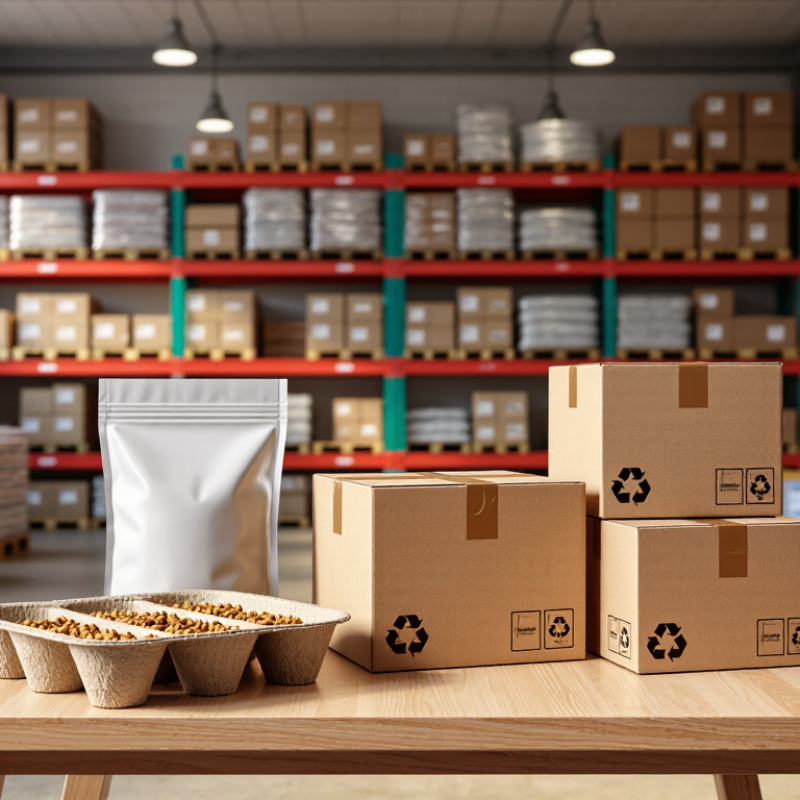
China’s eco-friendly packaging suppliers are changing sustainability from a slogan into a production discipline. The OECD’s Global Plastics Outlook reports that only 9% of global plastic waste was recycled in 2019. This gap pushes manufacturers toward paper-based structures, recycled polymers, and mono-material designs. Many Chinese factories now reduce solvent use with water-based inks and improve energy efficiency through upgraded drying systems. Small changes matter.
Material selection also affects shelf life. Barrier coatings can protect food, cosmetics, and medicines from moisture, oxygen, and light. However, a thinner package is not automatically greener. Poor barrier performance may increase spoilage and create more waste. Suppliers with strong technical teams use migration tests, seal-strength testing, and accelerated aging studies before mass production. These practices reflect ISO testing principles and improve traceability across batches.
Independent verification remains essential. The Ellen MacArthur Foundation promotes circular packaging design, while UNEP reports that global plastic pollution could be reduced substantially through reuse, recycling, and better product design. Certifications, factory audits, renewable-energy records, and lifecycle assessments help buyers examine real progress. Yet no supplier is perfectly sustainable. Renewable materials may require more land or water, and recycled content can vary by region. Some environmental claims still depend on limited data. Responsible suppliers should disclose these weaknesses, not hide them behind attractive packaging.
Choosing among China’s top ten eco-friendly packaging suppliers requires more than comparing prices or recycled-content claims. I start by checking material specifications, production capacity, and recent quality records. A reliable supplier should provide clear data for paper weight, barrier coatings, recycled content, and migration testing. Certificates matter, but certificates alone are not enough. I also request samples from different production batches.
Shelf life deserves practical testing. A package may look strong in a dry showroom but soften in humid warehouse conditions. I test filled samples through compression, vibration, temperature changes, and storage exposure. For food or sensitive goods, I compare oxygen and moisture protection against the product’s expected shelf life. The supplier should explain test methods, acceptance limits, and corrective actions in plain language.
Factory communication reveals another layer of quality. I review traceability records, inspection points, worker training, and backup equipment. I ask how defects are separated before shipment. During one evaluation, my initial shortlist looked too optimistic because the sample quality exceeded normal production quality. That mistake changed my process. I now inspect random cartons and request production-line evidence, not polished presentations. Delivery consistency, realistic minimum order quantities, and transparent cost changes also deserve attention. A responsible supplier admits limitations, documents them, and works toward measurable improvement.
China’s leading eco-friendly packaging suppliers increasingly focus on shelf life through material science, not appearance. The OECD’s 2022 Global Plastics Outlook reports that packaging creates about 40% of global plastic waste. This pressure encourages paper, molded fiber, cellulose film, PLA, and recyclable mono-material structures. However, each material has limits.
Paper-based packs often use water-based coatings to improve grease and moisture resistance. Molded fiber protects dry goods well, but it may soften in humid warehouses. Cellulose films provide good oxygen protection, while PLA performs better under controlled temperatures. For longer shelf life, suppliers combine thin barrier layers with precise heat-sealing systems. They test oxygen transmission rate, water vapor transmission rate, seal strength, and compression resistance. Small failures matter. A weak corner can ruin an otherwise excellent package.
The FAO reported that about 14% of food is lost between harvest and retail. Packaging cannot solve every loss, but it can slow oxidation, moisture migration, and contamination. Modified-atmosphere packaging, oxygen absorbers, and antimicrobial coatings may extend freshness when correctly validated. Their performance depends on the product, filling process, and storage temperature. A supplier should provide test conditions, migration records, and real-time shelf-life results. Accelerated testing is useful, but it is not a perfect replacement for warehouse trials. I would question any “fully compostable” claim without checking local facilities, coating chemistry, and disposal behavior. Eco-friendly design still needs honest measurement.
| Key Material or Technology | Primary Barrier Function | Typical Shelf-Life Range* | Common Packaging Applications | Sustainability Advantages | Important Technical Considerations |
|---|---|---|---|---|---|
| Recycled Paper and Paperboard | Moderate protection from light and physical damage; limited moisture and oxygen barrier unless coated. | 1–12 months | Dry foods, cartons, e-commerce boxes, labels, and secondary packaging. | Widely recyclable where clean fiber streams exist; can contain post-consumer recycled fiber; renewable fiber source. | Moisture, grease, and oxygen barriers usually require coatings or inner liners. Recycling performance depends on coating type and local facilities. |
| Molded Fiber Pulp | Good cushioning and structural protection; limited resistance to water, oil, and oxygen. | 1–6 months | Egg cartons, produce trays, protective inserts, food-service containers, and electronics packaging. | Made from recycled paper or agricultural fibers; generally compatible with paper recycling when free from problematic additives. | Humidity can reduce strength. Water- and grease-resistant treatments must be selected carefully to preserve recyclability and compostability claims. |
| Coated Paper with Water-Based Dispersion | Improved resistance to moisture, grease, and scuffing compared with untreated paper. | 3–18 months | Takeaway food containers, bakery packaging, frozen-food cartons, and paper cups. | Uses a paper-based structure and can reduce reliance on conventional plastic laminates. | Coating chemistry and coat weight affect repulpability. The package must be tested for seal strength, water resistance, and food-contact compliance. |
| Mono-Material Polyethylene (PE) Film | Good moisture barrier and heat-sealing performance; moderate oxygen and aroma barrier. | 3–18 months | Flexible pouches, produce bags, frozen foods, household products, and refill packs. | Designed for compatibility with PE film-recycling streams; simplified structures can improve sorting and recycling potential. | Often needs high-barrier coatings or additives for oxygen-sensitive products. Actual recycling availability varies significantly by region. |
| Mono-Material Polypropylene (PP) | Good moisture, heat, and chemical resistance; moderate oxygen barrier. | 3–24 months | Snack packaging, ready-meal trays, yogurt containers, caps, and reusable food containers. | Single-polymer structures are easier to identify and recycle than many mixed-material laminates where suitable collection exists. | Oxygen-sensitive products may require a barrier layer or coating. Heat-sealing temperature and stiffness must be matched to the filling process. |
| Bio-Based PE or Bio-Based PP | Performance is generally comparable to the corresponding fossil-based PE or PP grades. | 3–24 months | Films, bottles, closures, personal-care packaging, and food packaging. | Can reduce dependence on fossil feedstocks when responsibly sourced; usually compatible with the same recycling streams as conventional PE or PP. | Bio-based content does not automatically mean biodegradable or compostable. Feedstock traceability and certified content should be verified. |
| Polylactic Acid (PLA) | Good clarity and stiffness; limited heat resistance and moderate moisture and oxygen barrier. | 1–12 months | Cold cups, produce packs, bakery windows, transparent lids, and some food-service items. | Produced from renewable resources and industrially compostable in suitable systems and conditions. | Usually requires controlled industrial composting rather than home composting. It may contaminate conventional plastic recycling if incorrectly sorted. |
| Polyhydroxyalkanoates (PHA) | Useful moisture and oxygen barrier for selected food and non-food applications; performance varies by grade. | 1–12 months | Coatings, films, sachets, food-service items, and specialty flexible packaging. | Biopolymer family produced by microbial processes; some grades are designed for biodegradation in specific natural or composting environments. | Commercial availability, cost, heat resistance, and end-of-life behavior differ by formulation. The exact grade and disposal environment must be confirmed. |
| Aluminum Foil and Thin Aluminum Laminates | Excellent barrier against light, oxygen, moisture, and aroma when pinhole-free and properly sealed. | 12–36 months | Coffee, pharmaceuticals, retort products, powdered foods, and long-life beverages. | Aluminum can be recycled repeatedly where collection and reprocessing systems are available; its high barrier can reduce product waste. | Plastic-aluminum laminates are difficult to separate and recycle. Lightweighting and correct gauge selection are important for reducing material use. |
| Active and High-Barrier Coatings | Can improve oxygen, moisture, ultraviolet-light, aroma, or microbial protection without adding a thick structural layer. | 6–36 months | Coffee bags, snack films, pharmaceutical packs, meat packaging, and oxygen-sensitive foods. | May reduce total material weight and extend product life, helping lower food and product waste. | Performance depends on coating uniformity, humidity, sealing, and storage conditions. Active substances require regulatory review and migration testing. |
| *Shelf-life note: The ranges are indicative commercial ranges for properly designed packages under recommended storage conditions. Actual shelf life depends on product chemistry, filling hygiene, package size, seal integrity, temperature, humidity, light exposure, distribution conditions, and validation testing. Shelf-life claims should be confirmed through product-specific accelerated and real-time studies. | |||||
When evaluating China’s top ten eco-friendly packaging suppliers, shelf life should be a design question, not a marketing claim. Product protection begins with material selection. Paper-based packs can resist light, moisture, and oxygen when engineered with suitable barriers. A compostable film may perform differently in humid warehouses. Real conditions matter. In practical packaging trials, a small seal defect caused more waste than a slightly heavier carton. This detail is easy to miss.
Packaging geometry also affects shelf life. Tight folds, rounded corners, and stable stacking reduce crushing during transport. A damaged barrier quickly exposes food, cosmetics, or other sensitive goods to air and moisture. For temperature-sensitive products, insulation and vent placement can limit condensation. However, added layers may reduce recyclability. That trade-off needs testing, not assumptions. Suppliers should provide migration data, seal-strength results, humidity testing, and storage guidance. Independent laboratory verification makes those claims more credible.
Design teams should test the complete pack, including closures, labels, adhesives, and printing surfaces. One weak component can shorten the useful life of the entire package. Accelerated aging tests help compare designs, but they cannot fully reproduce seasonal shipping routes. Field trials are still valuable. Record temperature, humidity, compression, and opening performance. I would also question attractive green features that complicate sorting. A recyclable package that consumers cannot separate correctly may perform poorly in practice. Better design protects the product while using only the material the application truly needs.
Comparing Supplier Quality, Certifications, and Market Applications
A supplier’s environmental claim means little without measurable packaging performance. During practical sourcing reviews, I examine seal strength, moisture barriers, oxygen transmission, and print durability. These details directly affect shelf life.
The strongest suppliers usually maintain documented quality systems, such as ISO 9001, and environmental controls aligned with ISO 14001. Forest-based materials may carry FSC certification, while compostable products should show relevant testing under standards such as EN 13432. Food packaging also requires verified food-contact compliance for the target market. Certification scope matters. A certificate alone proves very little.
Laboratory data should include migration testing, accelerated aging, and real-time storage trials. A pouch for roasted coffee needs stronger oxygen protection than a paper mailer for clothing. Fresh produce packaging demands moisture control and ventilation. Cosmetics often require resistance to oils and alcohol-based formulas. Pharmaceutical applications need tighter validation and traceability.
Supplier comparisons should include factory audits, batch records, complaint handling, and sample consistency. Ask for test dates, material thickness, and storage conditions.
Some suppliers provide impressive samples but inconsistent production runs. That is a warning sign.
Shelf life is not created by “eco-friendly” materials alone. It depends on product chemistry, filling conditions, transport, and warehouse climate. My own judgment can be imperfect when supplier data is incomplete. Independent testing remains wise, especially before large orders.
Suppliers may use paper structures, recycled polymers, and mono-material designs. Water-based inks can reduce solvent use. Small upgrades matter.
No. A thin package may protect products poorly. Moisture or oxygen damage can cause spoilage and create more waste.
They can conduct migration, seal-strength, and accelerated-aging tests. These checks reveal whether packaging remains safe and stable over time.
Ask for paper weight, barrier details, recycled content, and recent quality records. Request samples from several production batches.
Test filled samples under compression, vibration, humidity, temperature changes, and storage exposure. A showroom sample can mislead you.
No. Certificates help, but factory audits, energy records, and lifecycle data provide stronger evidence. Claims still need careful review.
Renewable materials may require more land or water. Recycled content can vary by region. Some environmental claims rely on limited data.
Review traceability, inspection points, worker training, and backup equipment. Ask how defective cartons are separated before shipment.
Polished samples may exceed normal production quality. Random cartons reveal consistency, defects, and real manufacturing conditions.
The supplier should explain limitations, cost changes, minimum orders, and corrective actions. Honest details matter more than attractive packaging.
China’s leading eco-friendly packaging suppliers are advancing sustainability through recycled paper, biodegradable films, plant-based fibers, water-based inks, lightweight structures, and energy-efficient production. To evaluate the top 10 suppliers, buyers should compare material sourcing, manufacturing consistency, customization capabilities, quality control, certifications, export experience, and applications across food, cosmetics, retail, and industrial products. Reliable suppliers should also provide clear testing data and transparent information about environmental performance.
Packaging design has a direct effect on product shelf life. Strong barrier layers, moisture and oxygen resistance, suitable sealing systems, protective cushioning, and appropriate size can help preserve product quality while reducing material waste. The answer to “what is the shelf life of eco friendly packaging” depends on the material, storage environment, intended use, and disposal conditions; packaging itself may remain functional for months or years, while its environmental degradation time varies significantly. Comparing suppliers by durability, safety, certification, and market suitability helps businesses select practical and sustainable solutions.
